

A local plumber I know spent $1,800 a month on an agency for a year. He got a slick dashboard, rising “impressions”, and exactly zero new phone calls. That gap between traffic and revenue is where most small business SEO tips fall apart. The good news: the moves that actually generate leads are practical, mostly free to start, and don’t need a marketing degree. This guide walks through what to do first, how to rank locally, and how to tell whether your SEO spend connects to real business outcomes.
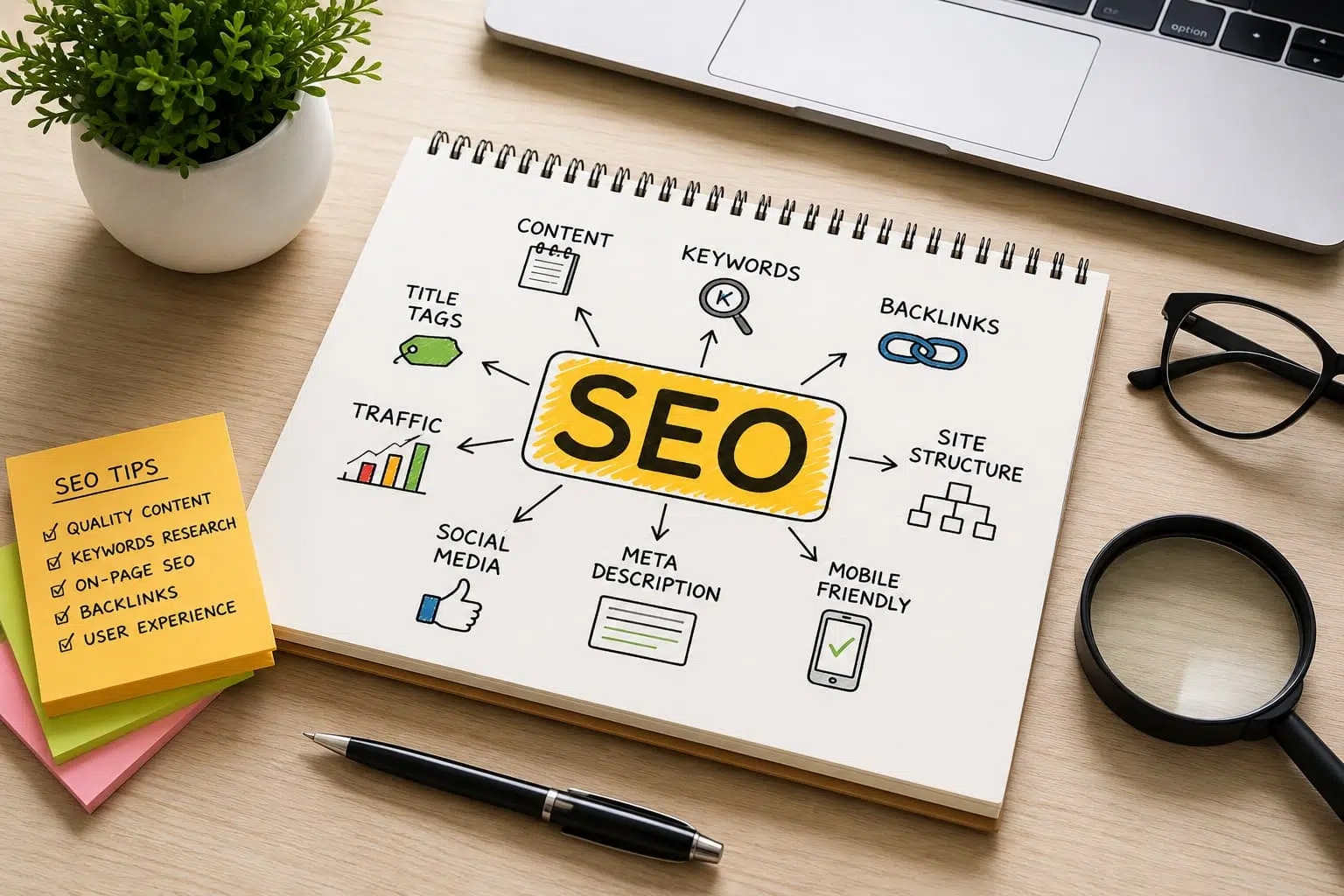
How to get started with SEO as a small business (clear first-steps action path)
Skip the fancy tools for now. The first wins in small business SEO come from things you already control.
- Claim and complete your Google Business Profile. Fill every field: categories, hours, services, photos, service areas. This is the single most valuable move for local search.
- Set up Google Search Console. It shows what queries you already appear for and where you’re losing clicks.
- Fix NAP consistency. Your name, address, and phone number must match everywhere, on your site and across local directories.
- Write honest page titles and meta descriptions. These influence click-through rate directly.
- List your core services on separate pages, each answering one search intent.
Google’s own Search Essentials documentation explains what search engines reward, for free. If you want a broader primer on the fundamentals, Google’s SEO Starter Guide covers the same ground for beginners. Start there before spending on any SEO tools. This order matters. An SEO strategy built on a solid profile and clean data compounds, while shortcuts get wiped by the next update. Get these basics right and you’ve already built a stronger foundation than competitors relying on paid advertising alone, and this foundation is the backbone of effective SEO marketing for your small business.
Targeting the right keywords and search intent to attract qualified leads
Ranking for a broad term feels impressive and produces almost nothing. Traffic alone isn’t enough.
The right keywords for a small business are specific, local, and tied to what a buyer types when they’re close to a decision. “Emergency furnace repair Denver” tends to convert. “HVAC” does not. That specificity is search intent in action. The closer a phrase sits to a purchase, the more qualified the lead, because a buyer who types a narrow, service-plus-location query has already decided what they want and is choosing who to call.
- Target local keywords that pair a service with a place.
- Prioritize long-tail phrases with clear buyer intent over high-volume head terms.
- Group related queries so one page can rank for a cluster, not a single term.
- Match each page to one intent: informational, comparison, or ready-to-buy.
You can check demand and difficulty with free and paid SEO tools. Ahrefs’ keyword research guide breaks down how to read intent signals. If you’re weighing your options, this roundup of the best SEO tools for small business owners narrows the field to what actually helps. Many owners assume more keywords means more traffic. In reality, choosing three of the right keywords that attract qualified leads tends to beat fifty vanity terms that never generate inquiries. This is where a focused SEO strategy earns its keep, and where freelance SEO support can quickly find the gaps.
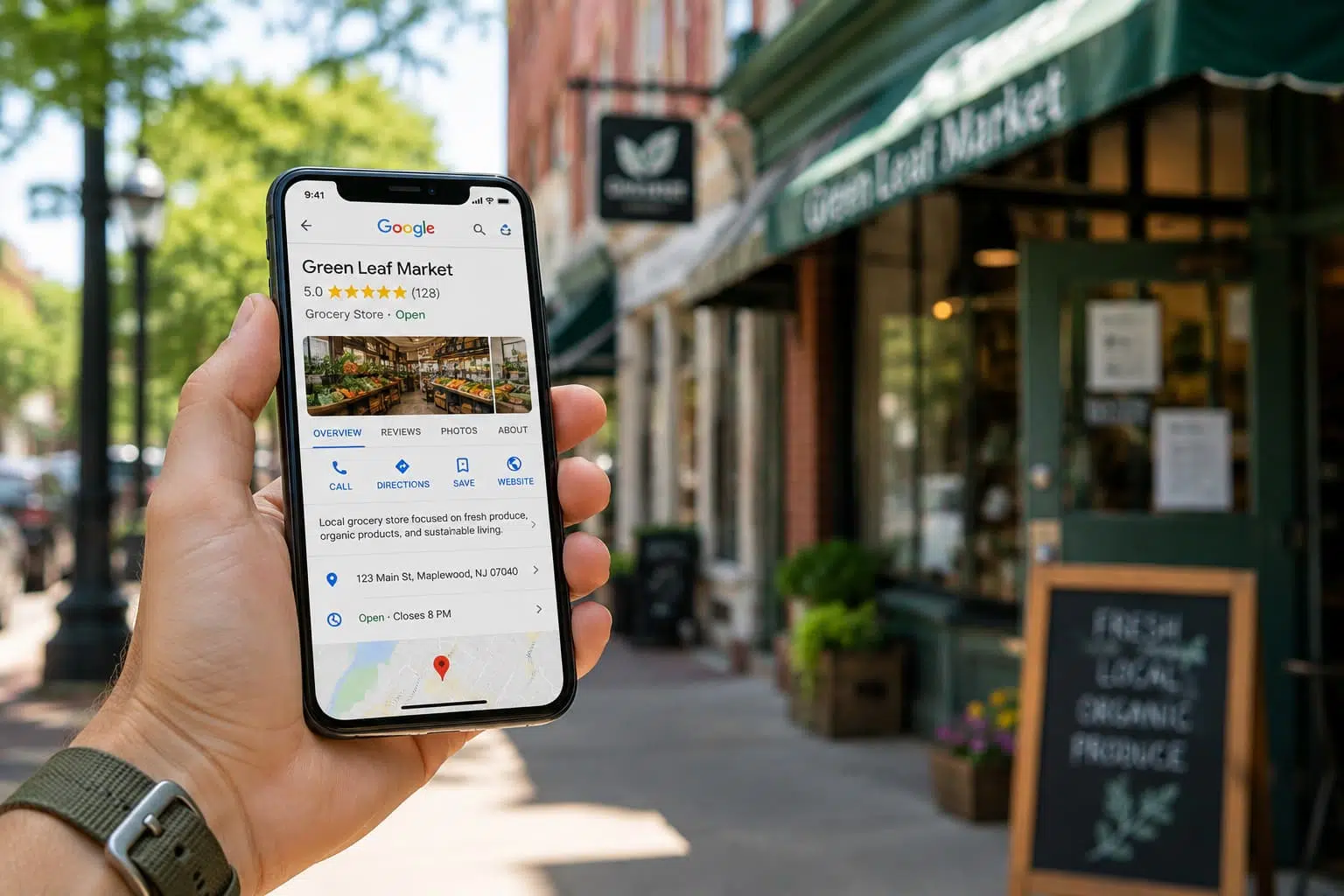
Local SEO and Google Business Profile optimisation to drive nearby leads
Most local businesses lose deals to a competitor two miles away, simply because that competitor’s Google My Business listing is more complete. Nearby customers rarely scroll past the map pack.
To strengthen local search performance:
- Optimize your Google Business Profile with accurate categories, services, service areas, and fresh photos.
- Post updates weekly so your profile signals an active business.
- Get listed in relevant local directories with identical NAP details.
- Respond to every review, positive or negative, within a few days.
- Build location-based content that names the neighborhoods and towns you serve.
Following the official Google Business Profile guidelines keeps your listing compliant and reduces the risk of suspension. Google cross-references your Google My Business profile, your website, and third-party mentions to decide whether you’re a real, relevant local option. Inconsistent listings break that trust and can quietly suppress your organic visibility. For businesses juggling multiple locations or a stalled listing, hands-on local SEO for small businesses is exactly the work Vineet Kukreti handles directly, without an account manager. Done well, this is one of the more direct paths from search visibility to foot traffic and calls.
Writing content for humans and search intent that converts visitors
Content that ranks but doesn’t convert is a very expensive hobby. The goal isn’t more clicks. The goal is better business outcomes.
Write for the person, then structure for the search engine. Answer the actual question a visitor came with. Then guide them toward the next step: a call, a quote, a booking.
- Open each page by answering the searcher’s question in the first two sentences.
- Use headings that mirror how customers phrase their problems.
- Add proof: reviews, before-and-after examples, specific results.
- Include one clear call to action per page.
Picture a landscaping company that publishes ten generic blog posts and wonders why no one calls. The posts rank for readers who will never hire a landscaper. Shift that content strategy toward buyer questions (“cost to install a paver patio in Austin”) and the same effort can produce qualified leads. Rich content that matches search intent, paired with a clean user experience, helps keep visitors on the page and supports conversion. That link between a content strategy and revenue separates useful pages from digital wallpaper.
Technical SEO and website performance fixes that unlock rankings
You can write perfect content and still lose rankings to a slow, broken site. Search engines read website performance as a proxy for user experience, so a page that loads slowly or breaks on mobile signals a poor experience and can get demoted.
The most common technical SEO issues on small business sites are often fixable in an afternoon:
- Compress images so pages load in under three seconds.
- Enable mobile optimization with responsive design, since most local search happens on phones.
- Fix broken links and redirect chains that waste crawl budget.
- Add an XML sitemap and clean URL structure so pages get indexed.
- Secure the site with HTTPS, a baseline ranking factor.
The root cause of many ranking stalls after a redesign is technical, not content. If your site recently changed and traffic dropped, it’s worth understanding why your business isn’t showing up on Google before assuming you need more content. Developers launch a fresh design and accidentally block indexing or drop old URLs. Traffic can vanish overnight. Website project management that carries SEO from planning to launch helps prevent this. That’s why Vineet Kukreti keeps technical SEO and mobile optimization in the loop during Figma-to-launch builds, rather than bolting them on later. Solid performance protects the visibility every other tactic depends on.
Google doesn’t just count your pages. It weighs whether the wider web treats you as credible. That’s the practical meaning of EEAT: experience, expertise, authoritativeness, trust.
For a small business, EEAT is built through signals you can influence:
- Customer reviews across your Google Business Profile and industry platforms.
- Local backlinks from chambers of commerce, suppliers, and local news.
- Authoritative links earned by being genuinely useful or quoted.
- A named author or owner on key pages, not a faceless “admin.”
- Accurate, cited claims rather than exaggerated marketing.
Many assume backlinks are about volume. In reality, a few relevant local backlinks and steady customer reviews often outperform a hundred spammy links that can trigger penalties. Ask happy customers for reviews within 48 hours of finishing a job, when goodwill is highest. Reach out to local partners for mentions. It also helps to add schema so your credibility signals are machine-readable, and Google’s documentation on structured data explains exactly how to mark up reviews and business details. Keep in mind that some review and endorsement practices are regulated, and the rules vary by jurisdiction: in the U.S. the Federal Trade Commission requires disclosure of incentivized or fake reviews, so check the guidance that governs your location before soliciting testimonials. Over time these authoritative links and trust signals can compound into brand authority that paid advertising can’t buy, feeding long-term growth instead of a short spike.

Realistic SEO timelines and ROI vs paid advertising
Here’s the honest version most agencies won’t say out loud. Meaningful SEO results usually take three to six months, and competitive markets can take longer. Results vary based on competition, website condition, industry factors, and implementation.
That timeline is exactly why business owners ask, “Why not just run ads?” Paid advertising buys instant traffic, but the moment you stop paying, the leads stop. SEO works the opposite way: slow to start, then durable.
- Paid advertising: fast results, ongoing cost, traffic ends when spend ends.
- SEO / organic traffic: slower ramp, compounding returns, lower cost per lead over time.
The smart play for most small businesses is a blend: ads for immediate lead generation while your organic traffic builds toward long-term growth. Track ROI by connecting rankings to inquiries and closed business in Google Search Console and your CRM. If you only watch your results at the traffic level, you’ll miss whether your rankings actually produce revenue. Business outcomes, not pageviews, decide whether your SEO strategy is working. These are the small business SEO tips that separate spend from return.
Agency vs solo consultant: getting hands-on SEO support without overhead
The frustration is familiar. A business pays an agency $1,500 a month, talks to a rotating cast of account managers, and receives reports full of metrics that never turn into calls. You’re paying for overhead, not expertise.
A solo consultant model works differently:
- You talk to the person doing the actual work.
- Strategy and execution come from the same brain, so nothing gets lost in handoffs.
- A limited client roster means faster responses and deeper involvement.
- Reporting is transparent: you always know what’s being done and why.
Vineet Kukreti works with a small number of clients at a time as a freelance SEO consultant. He handles strategy, technical fixes, local search, and website project management personally, rather than through layers of staff. For lean teams that need direction and hands-on help without agency retainer prices, working with a freelance SEO consultant is often the difference between an SEO strategy that stalls and one that moves. The trade-off is scale. A freelance SEO consultant isn’t built for enterprise-sized campaigns, and that’s the point.
Book a free SEO discovery call: your next concrete step
You don’t need to commit to a retainer to find out what’s holding your rankings back. Start with a conversation.
A free consultation call is a low-risk way to get a clear read on your situation. In one session, you can surface whether your problem is visibility, conversion, or positioning, and leave with an actionable next step. If you’d rather explore the format first, you can book a free SEO discovery call and see whether it fits your needs before committing to anything.
- Bring your Google Business Profile and website URL.
- Note where leads currently come from and what’s stalled.
- Ask specifically about local search, technical SEO, and content gaps.
Here’s what a good discovery call should do: point out the two or three fixes that will move the needle first, not sell you a package. If an SEO consultant can’t explain their reasoning in plain English during that free consultation call, that’s your answer. The goal of these small business SEO tips has always been the same: fewer wasted dollars, more qualified lead generation, and a strategy tied to real growth.

If your website is getting visits but not turning them into inquiries, a short strategy review can help pinpoint where opportunities are slipping away. Book a free SEO discovery call with Vineet Kukreti and get a straight answer on what to fix first, with no obligation and no jargon.
FAQs
Q1. What's the fastest way to improve SEO for a small business?
A1.
Start with your Google Business Profile and Google Search Console, then fix site navigation, page titles, and meta descriptions so both users and search engines understand your pages. These low-cost basics usually move local visibility faster than chasing broad, competitive keywords.
Q2. How can I do SEO on a limited budget?
A2.
Focus on high-impact, free actions first: fully complete your Google Business Profile, keep your name, address, and phone number consistent across directories, and target specific long-tail keywords that match buyer intent. These often convert better and are far easier to rank for than head terms.
Q3. What if I've already spent money on SEO and seen no results?
A3.
That usually points to a visibility, conversion, or positioning problem rather than a traffic one. Audit whether your content targets real search intent and whether visitors are actually converting into inquiries, then fix the gap instead of buying more traffic.
Q4. How is small business SEO different from enterprise SEO?
A4.
Small business SEO targets local or regional audiences across a limited set of pages and long-tail keywords, while enterprise SEO manages thousands of pages competing nationally. Small businesses win with GBP optimization, local relevance, and focused technical fixes rather than large teams and broad, high-competition terms.
Q5. Can ChatGPT do my SEO for me?
A5.
ChatGPT can help with keyword ideas, drafting content, and outlining structured data, but it can’t audit your site, verify local rankings, or make strategic decisions about your market. Treat it as a research assistant, not a replacement for a human who understands your business outcomes.
Q6. How do I optimize my site for AI-powered search?
A6.
Add schema markup so engines can interpret your content, and write pages that directly answer the questions customers actually ask. Pair that with a fast, mobile-friendly site using responsive design and compressed images to hold visibility across both traditional and AI search.

Vineet Kukreti is an experienced SEO and project management expert with over 10 years of success helping small businesses grow. He has led SEO campaigns that improved Google rankings, increased website traffic, and strengthened local visibility. As a project manager, Vineet brings structure and efficiency to digital operations, ensuring smooth execution and measurable results. His combined expertise in SEO and business operations makes him a trusted partner for growth-focused businesses.