
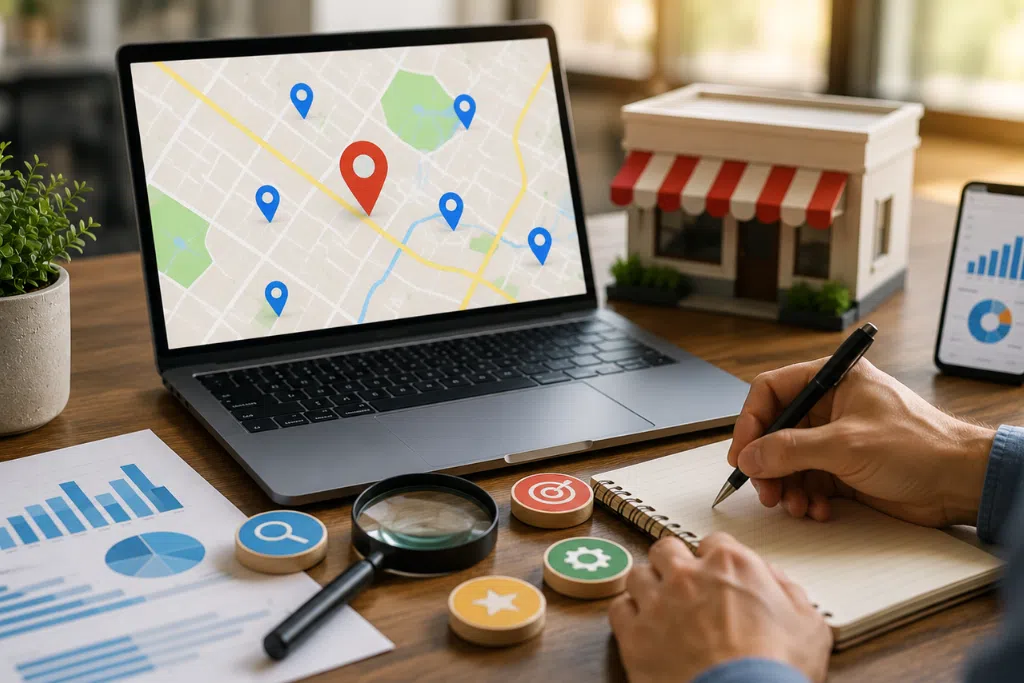
A plumber in a mid-size town told me he’d spent two years and thousands of dollars on a website nobody could find. His competitors, some with worse work and higher prices, showed up first every time someone searched for a plumber nearby. His problem wasn’t the website. He’d ignored local SEO for small business entirely, and Google had no reason to show him. This guide walks through the steps that fix exactly that: getting found by the people down the street who are ready to buy.

What is local SEO (and how it differs from general SEO)
Local SEO is a branch of search engine optimization focused on ranking your business for searches tied to a specific place. General SEO tries to rank a page for a topic anywhere in the world. Local SEO tries to win the customer three miles away who is searching right now.
The mechanics differ in a way most people miss. General search engine optimization leans heavily on content depth, technical SEO, and backlinks. Local search adds a physical layer: your proximity to the searcher, your Google Business Profile, and signals like reviews and NAP consistency. Google runs a separate ranking system for local intent. So a page that ranks well nationally can still be invisible in the local map pack. If your listings aren’t appearing at all, it’s worth understanding why your business isn’t showing up on Google before assuming your website is the problem.
Many assume that a strong website alone will attract local customers. In reality, your website is only part of the picture, and often not the deciding one. Google’s own Google Business Profile Help documentation lists relevance, distance, and prominence as the three core factors for local ranking. Two of those three have little to do with your website and everything to do with your business profile and reputation. For more depth on the fundamentals, our guide to SEO for small business covers how these pieces fit together.
Why local SEO matters for small businesses
Local search is where buying decisions happen. When someone types “emergency electrician” or an implied “near me” query, they aren’t browsing. They’re ready to hire. According to Think with Google, searches with local intent lead to action fast, with a large share of nearby searchers visiting a business within a day. That’s a level of purchase intent paid ads rarely match.
For a small local business, local SEO is the most cost-effective way to compete. You aren’t fighting national brands for generic keywords. You’re competing against local competitors in a smaller field, and the fundamentals are learnable. The consequence of ignoring it is quiet but expensive. You don’t get an error message when you’re missing from local search. You just get fewer calls, and never know why. Meanwhile, the competitor with a well-optimized profile absorbs the local traffic that should have been yours. A sound local seo strategy is less about beating everyone and more about being present when a ready buyer looks.
Want this done for you?
I run local SEO for small businesses in the US, UK and Canada: Google Business Profile, citations, location pages and reviews, with a plain-English report every month.
Optimizing your Google Business Profile
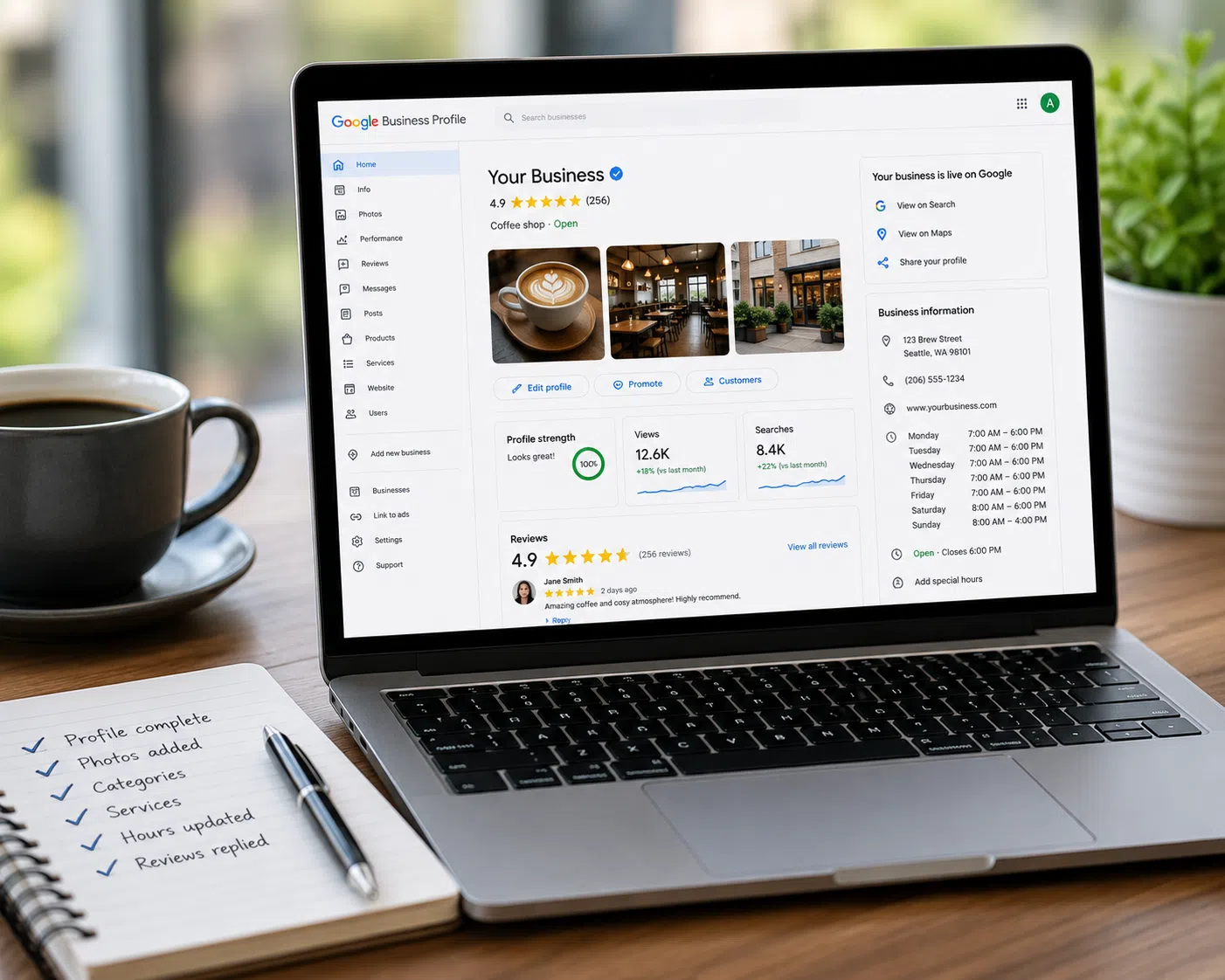
Your Google Business Profile is the single highest-value asset in local SEO. It feeds the map pack, the knowledge panel, and much of what people see on Google Maps before they ever reach your website.
Start with the basics, done completely:
- Claim and verify the profile through Google My Business so you control the listing.
- Fill in every field: business name, address, phone, hours, website, and services.
- Choose the most accurate primary category, then add relevant secondary categories.
- Upload real photos of your work, your team, and your location.
- Collect and respond to customer reviews consistently.
An incomplete profile causes Google to downgrade your prominence. A half-filled profile signals a business that may not be active or trustworthy. So the algorithm favors competitors who look more established. Google My Business rewards completeness because it reduces the risk of sending a searcher to a closed or incorrect business. If you want to squeeze more out of your profile, these local maps optimization tips for small businesses go beyond the basics.
One roofing contractor I worked with went from barely visible to appearing in the local map pack within weeks. He did it mostly by finishing his profile and gathering fifteen genuine reviews. No website overhaul. Just a serious profile. It’s also a proven way to increase Google Business Profile traffic without ads. For businesses that don’t have time to manage this, Vineet Kukreti handles local search optimization and Google Business Profile setup directly, without an agency layer.
Local keyword research and targeting
Local keyword research is about matching the exact language people use when they search for what you do in your area. National keyword research chases volume. Local keyword research chases search intent tied to a location.
The pattern is usually simple: service plus location. Think “AC repair Austin,” “family dentist in Portland,” or “tax accountant near me.” These local keywords have lower volume than broad terms, but the intent is far stronger. That usually means better conversion rates.
A practical way to find them:
- List every service you offer in plain customer language.
- Add your city, neighborhoods, and surrounding towns to each.
- Check Google’s autocomplete and “people also search for” suggestions.
- Use a tool like Semrush or Ahrefs to confirm the terms that real people search for.
Don’t overlook near me searches. You can’t literally target the phrase “near me” on your page. But Google interprets it based on the searcher’s location, so a well-optimized profile and location-based content automatically cover that intent.
Map these local keywords to specific pages. One page per major service, each one clearly tied to the area you serve. Trying to rank a single generic page for everything is why so many small-business sites remain invisible in local search results.
Getting listed in local directories and NAP consistency
NAP stands for name, address, and phone number. NAP consistency is one of the least glamorous, highest-return tasks in local SEO. The root cause of many suppressed rankings is simple: your business information doesn’t match across the web.
Here’s why that hurts. Google might find your business listed as “Main Street Plumbing” on one directory and “Main St. Plumbing LLC” with an old phone number on another. It can’t confirm which details are correct. That uncertainty lowers your prominence, and prominence is one of Google’s three local ranking factors.
Local citations and online directories are where you build this trust. Prioritize the ones that matter:
- Google Business Profile and Bing Places
- Yelp, Apple Maps, and Facebook
- Industry-specific and local chamber directories
Every listing should carry the exact same name, address, and phone number. No abbreviations on one, and full spellings on the other. This is boring work, and that’s precisely why so many local businesses skip it and lose ground to competitors who didn’t. Getting your local citations aligned across online directories is often the fastest way to recover lost local search rankings without touching your website at all.
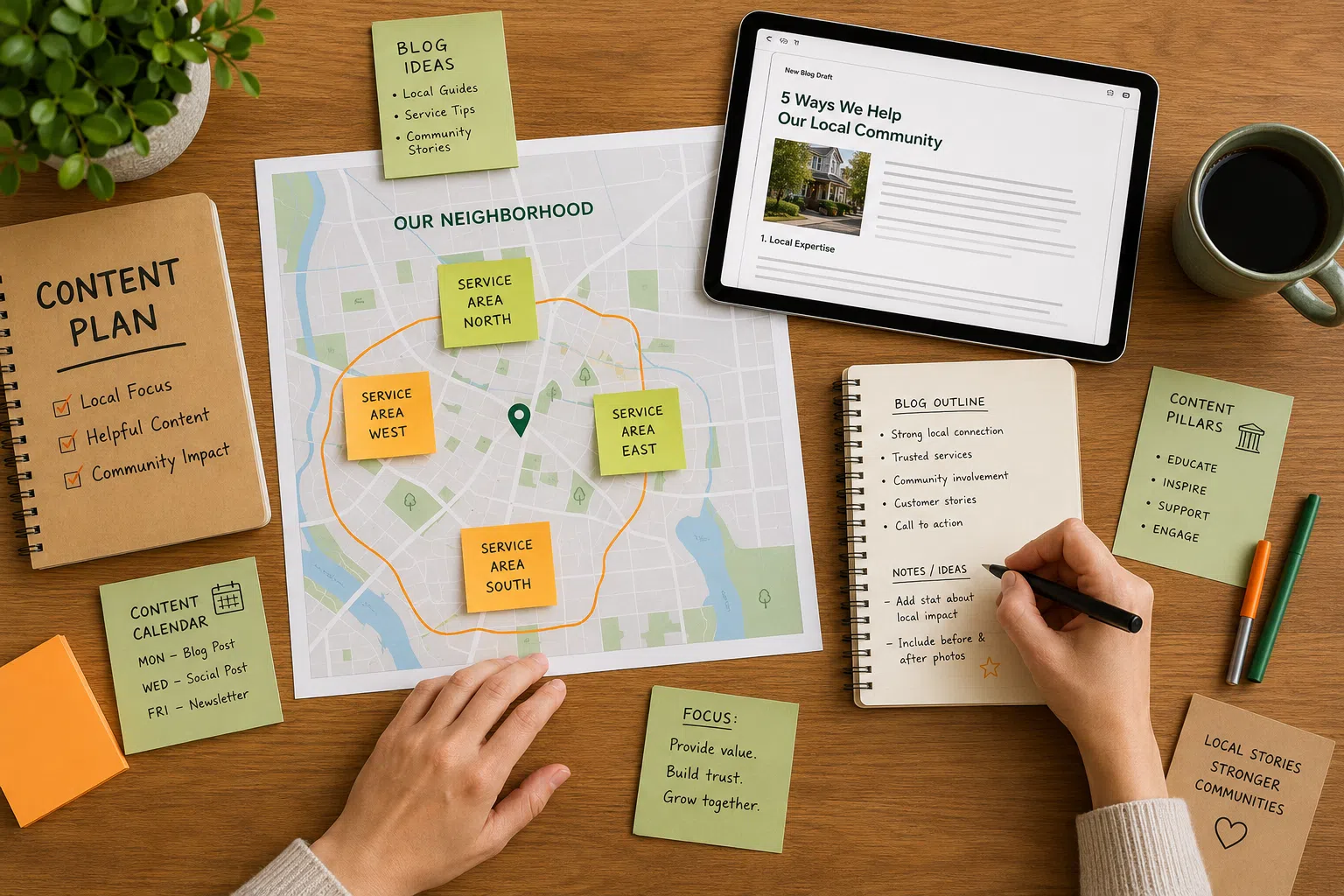
Creating location-based and locally focused content
Content is where you signal relevance beyond your profile. Location-based content tells Google, and readers, that you genuinely serve a specific area rather than casting a wide, generic net.
This isn’t about stuffing your city name into every sentence. It’s about writing things that only a real local business would write:
- Individual service-area pages for each town or neighborhood you cover
- Answers to questions your local customers actually ask
- Case studies or project write-ups tied to a specific location
- Content around local events, regulations, or seasonal issues in your area
A landscaping company writing about drought-resistant plants for its specific climate zone earns local relevance no national blog can match. That’s location-based content doing real work.
The strategic point: this content supports local search rankings and brand awareness at once while driving local traffic that converts. Someone reading your neighborhood service page starts to recognize you before they call. That builds local brand recognition and improves conversion rates when they finally reach out. Traffic alone isn’t enough. Content that answers real questions from local customers turns visibility into inquiries.
The local map pack and where you can rank
The local map pack is the block of three business listings with a map that appears at the top of local search results. For most local queries, it sits above the regular organic results, which is exactly why it matters so much.
There are essentially three places you can appear in local search:
- The local map pack (the top three map listings)
- The organic results below it
- Google Maps itself, when people search directly there
The map pack is the prize because it captures the most clicks and calls. Google’s mix of relevance, distance, and prominence decides who lands there, the same factors that govern your profile. Proximity to the searcher matters, so a business two blocks away often outranks a stronger competitor across town for the same query.
Many assume you can buy or force your way into the map pack. In reality, there’s no shortcut. It comes down to a complete Google Business Profile, steady customer reviews, NAP consistency, and genuine local relevance. The businesses that treat these as a connected local SEO strategy rather than isolated tasks are the ones that stick in those three spots and hold their local search visibility over time.
Building local backlinks and citations
Local backlinks are links from other websites in or around your community, and they carry weight that generic links don’t. A link from a local newspaper, a nearby business, or a community organization signals to Google that you’re an established part of the area.
The mechanism is prominence again. Google treats local backlinks and citations as votes of confidence from your community, which strengthen your standing in local search. National links help general search engine optimization, but locally relevant links move the needle specifically for local rankings.
Practical ways to earn them:
- Sponsor a local event, team, or charity that lists sponsors online
- Join your chamber of commerce and local business associations
- Partner with complementary local businesses for referrals and links
- Get featured in local news, blogs, or “best of” roundups
This overlaps with citation building. Every quality directory listing is both a citation and, often, a link. The distinction: citations confirm your NAP details, while local backlinks pass ranking authority. You want both. A steady backlink strategy focused on genuinely local sources supports sustainable organic growth rather than the quick, risky link schemes that eventually get penalized. This is slower work, but it compounds, and it’s hard for competitors to copy quickly. If this feels like more than you can manage alone, working with a freelance SEO consultant can take the outreach off your plate.
Measuring results and tracking local SEO performance
If you can’t measure it, you can’t improve it, and vague reassurances about “gaining traction” mean nothing. Track the metrics that connect to actual business outcomes, not vanity numbers.
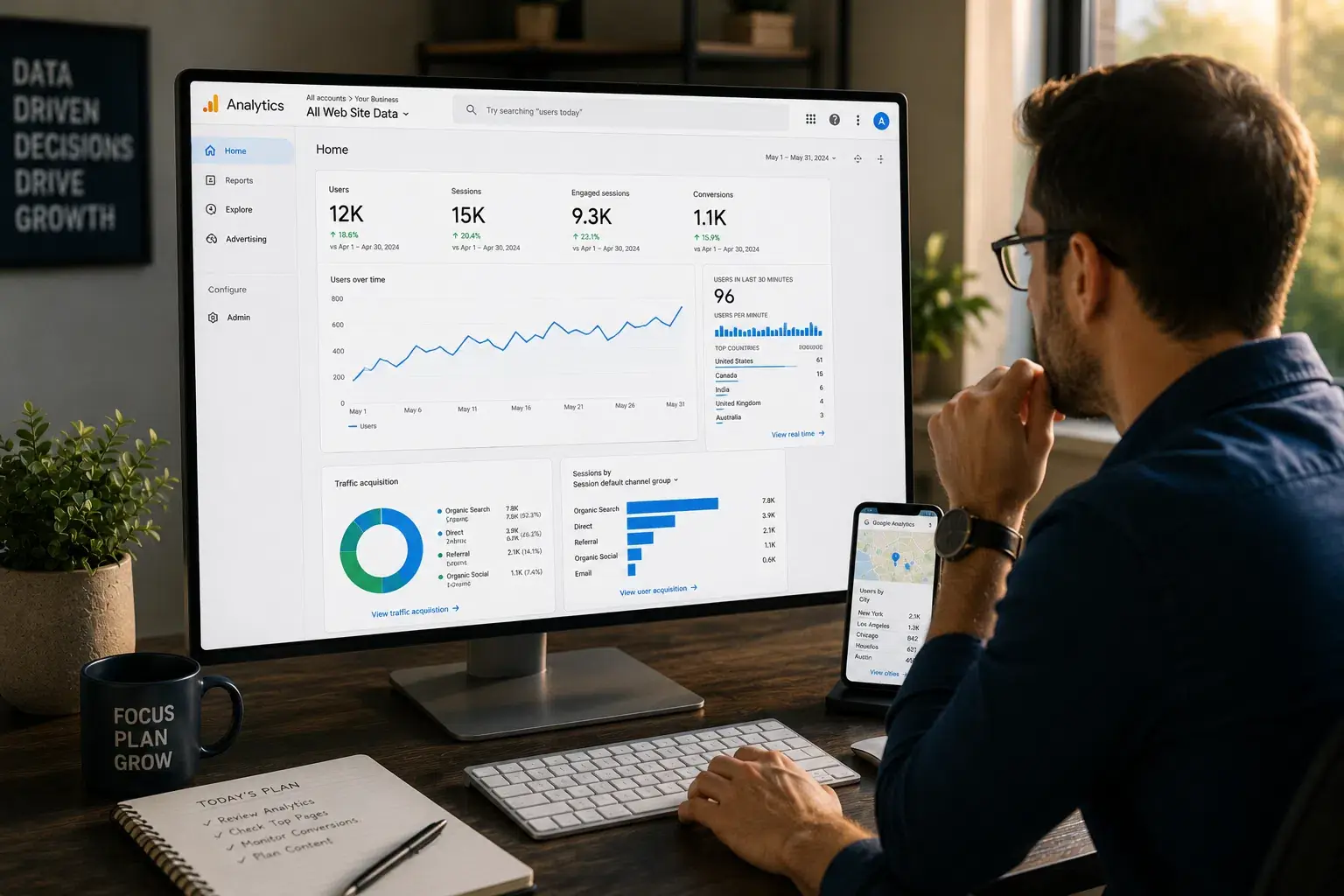
The core things worth watching:
- Calls, direction requests, and clicks from your Google Business Profile insights
- Your ranking position for your main local keywords
- Local traffic and conversions from Google Search Console and Google Analytics
- Volume and quality of new customer reviews over time
- How often you appear in the local map pack for target searches
Results vary based on competition, website condition, industry factors, and implementation, so don’t expect a straight line. Local SEO builds gradually. A new business in a competitive city moves slower than an established one in a smaller market.
The mistake I see most is confusing traffic with results. More clicks feel good, but the goal isn’t more clicks. The goal is better business outcomes: more qualified leads, more calls, more booked jobs. Tie your tracking back to revenue where you can. Website performance matters here too, since most local searches happen on phones, and a slow mobile site quietly kills the conversions your rankings earned. Measuring the right things keeps your local SEO strategy honest.
Common local SEO mistakes that keep you invisible on Google
Most local businesses aren’t held back by anything exotic. They’re held back by a handful of avoidable mistakes that quietly cap their local visibility.
The usual suspects:
- An unclaimed or half-completed Google Business Profile
- Inconsistent NAP details scattered across online directories
- Ignoring customer reviews, or worse, never asking for them
- Choosing the wrong or too-broad business categories
- One generic page trying to rank for every service and every town
- A slow website with no mobile optimization
- Treating local SEO as a one-time setup instead of ongoing work
Here’s the misconception worth killing: many owners believe that once the profile is set up, the work is done. In reality, local search rankings shift constantly as competitors optimize and Google updates its systems. A profile left untouched for a year loses ground even if nothing about it changed. If you’d rather get expert eyes on your setup, you can book an SEO consultation to review your current position.
The other quiet killer is neglecting reviews. Customer reviews influence both rankings and whether someone chooses you over the listing next to yours. Skipping the ask leaves qualified leads on the table. Fixing these fundamentals usually does more for your local search visibility than any advanced tactic.
If your business isn’t showing up on Google Search or Google Maps and you’re not sure which of these issues is holding you back, a focused local SEO for small business review can pinpoint where the gaps are. You can book a free discovery session with Vineet Kukreti to walk through your local visibility and get a clear, honest picture of what to fix first.
Want this done for you?
I run local SEO for small businesses in the US, UK and Canada: Google Business Profile, citations, location pages and reviews, with a plain-English report every month.
FAQs
Q1. What is local SEO and how does it actually work for a small business?
A1.
Local SEO is the process of optimizing your online presence so your business appears when people search for products or services in your area. It works primarily through your Google Business Profile, consistent business information across the web, and local search signals that push you into the ‘Local Pack’:the map and listings shown at the top of local results.
Q2. How can my small business improve its local search rankings?
A2.
Start by fully completing and verifying your Google Business Profile with an accurate name, address, phone number, hours, and services, then add high-quality photos and collect genuine customer reviews. Keep your business details consistent across every directory and platform, since inconsistent information confuses search engines and hurts your visibility.
Q3. How do I optimize my Google Business Profile for local search?
A3.
Claim and verify your profile, complete every field accurately, and select the most relevant primary and secondary categories so Google understands what you offer. Add photos regularly and respond to all reviews: businesses with photos receive roughly 42% more requests for directions.
Q4. Is SEO dead or still worth doing in 2026?
A4.
SEO is evolving, not dying: people still search for businesses, products, and answers; they just do it across more platforms, including AI-powered answer engines. The businesses winning in 2026 treat search as part of a complete digital presence rather than a one-off tactic.
Q5. What is the 80/20 rule of SEO for a local business?
A5.
It means roughly 80% of your local results come from about 20% of your efforts: usually your Google Business Profile, consistent NAP information, and reviews. Focusing on these high-impact fundamentals first delivers more return than chasing every minor ranking factor.
Q6. What if I already tried SEO and saw no results: will this be any different?
A6.
Most stalled SEO efforts fail because they focus on vanity metrics rather than qualified leads, or because the work is done without a clear strategy or accountability. In reality, the problem is usually visibility, conversion, or positioning: fixing the right fundamentals often changes results, even when past efforts didn’t.

Vineet Kukreti is an experienced SEO and project management expert with over 10 years of success helping small businesses grow. He has led SEO campaigns that improved Google rankings, increased website traffic, and strengthened local visibility. As a project manager, Vineet brings structure and efficiency to digital operations, ensuring smooth execution and measurable results. His combined expertise in SEO and business operations makes him a trusted partner for growth-focused businesses.