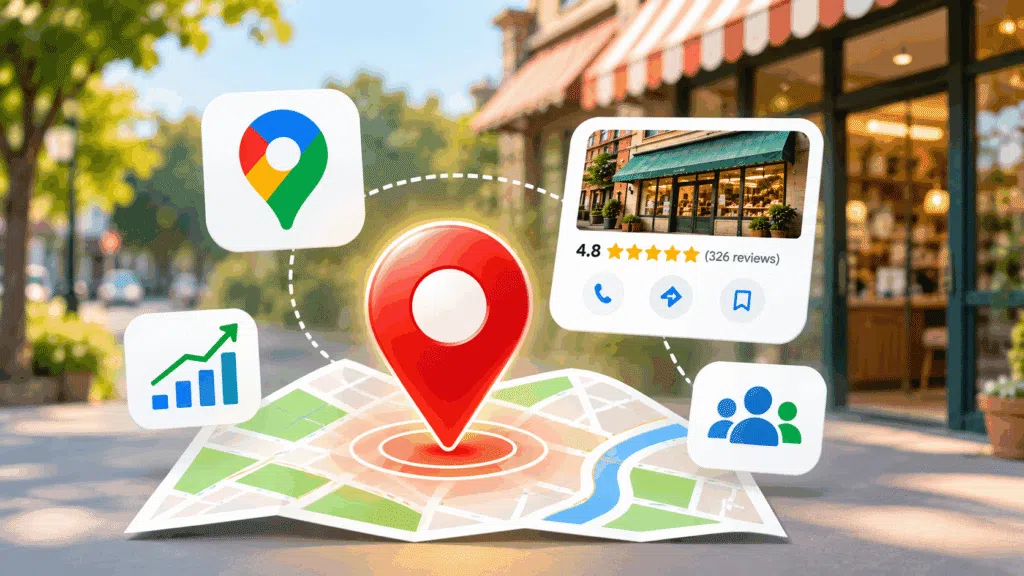
A plumber two blocks from a flooded basement loses the job to a competitor across town. Not because he’s worse. Because he’s invisible on Google Maps when someone types “emergency plumber near me.” That gap between being nearby and being found is exactly what Google Maps SEO closes. This guide walks through how Maps ranking actually works, what Google rewards, and the practical steps to turn a quiet listing into a steady source of calls.
What is Google Maps SEO and how it works
Google Maps SEO is the process of optimizing your business listing so it appears higher when local customers run location-based searches. When someone searches “coffee shop near me” or “accountant in Austin,” Google pulls local businesses from its index and ranks them inside Maps and the local search results. Your position depends on how well your Google Business Profile matches that search. If you want this handled for you, Vineet Kukreti offers local SEO services built around Google Business Profile optimization that cover exactly this groundwork.
Here’s what happens behind the scenes. Google reads your business category, service keywords, reviews, and proximity to the searcher. It then scores you against every nearby competitor. This is a form of search engine optimization aimed at local intent rather than broad web queries, and it’s a major driver of Google Maps rankings.
The mechanics aren’t a secret. Google publishes how it ranks local results in its Google’s own ranking factors for Local Search, which state plainly that local ranking is based on relevance, distance, and prominence. Many small business owners never read it, which may explain why some listings underperform. The reason this matters is simple: Google can only rank what it can clearly understand, so a listing that spells out its category, services, and location in plain terms gives the algorithm fewer reasons to pass it over.
Why Google Maps SEO matters for local businesses
Most local searches never make it past the map pack. Someone looking for a nearby service rarely scrolls to the blue links below. They tap one of the three businesses Google surfaces at the top and call. If you’re not in that pack, you’re competing for scraps.
The intent behind these searches is what makes them valuable. A person searching “dentist near me” isn’t browsing. That search intent signals they want an appointment now. That’s a qualified lead walking toward you, and Google Maps SEO decides whether local customers see your door or someone else’s.
The scale is real. According to Google’s own Economic Impact reporting, local search connects people to nearby businesses billions of times. Many assume paid ads are the only fast way to capture this traffic. In reality, a well-optimized Business Profile can earn lasting search visibility that keeps working without a daily ad spend, making it a foundation for organic growth rather than a temporary boost. If you’re unsure where your listing stands, book a free SEO discovery session before investing more time guessing.
How Google Business Profile drives Maps rankings
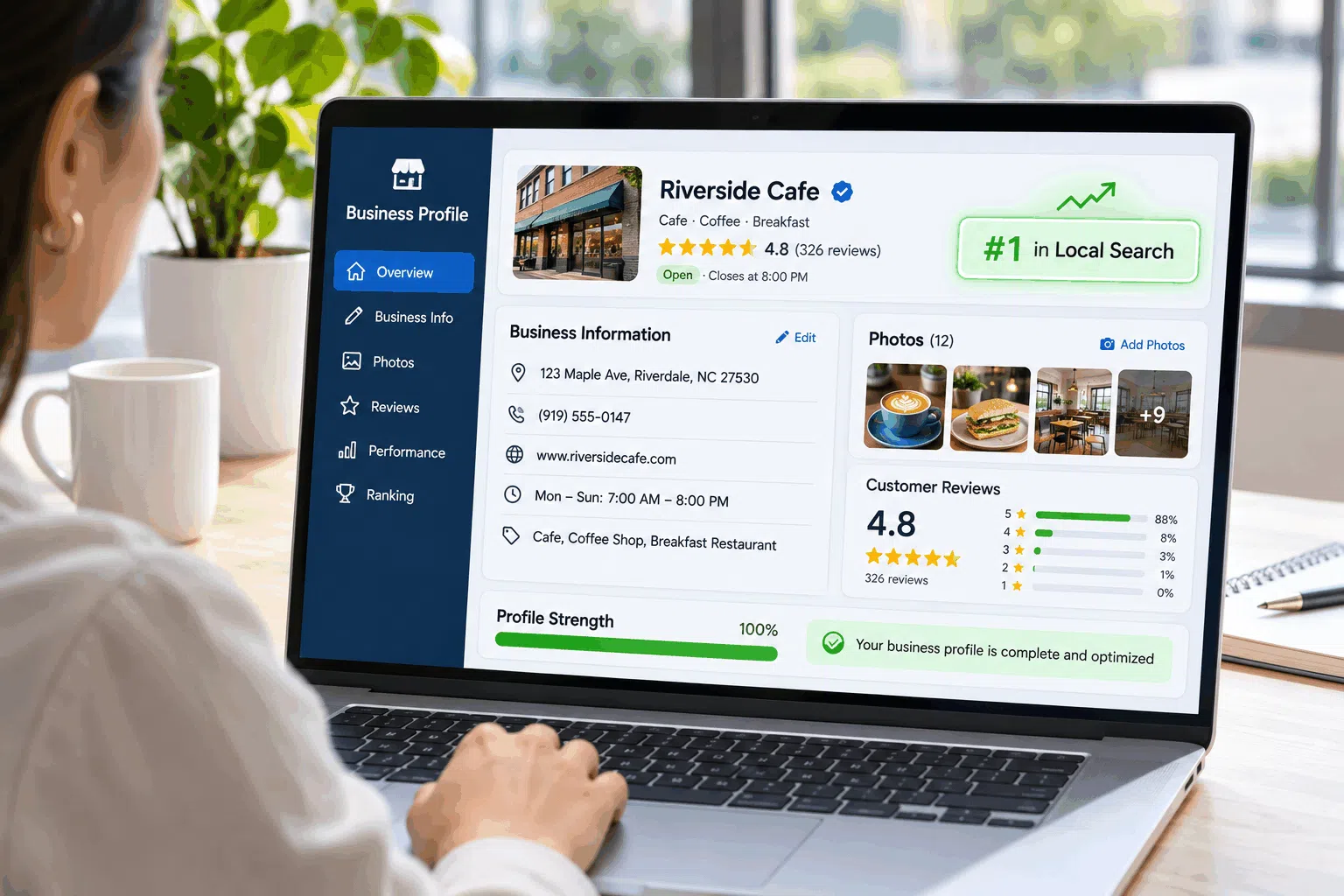
Your Google Business Profile is the engine behind your Maps presence. Formerly called Google My Business, it’s the free listing that feeds Google everything it needs to rank you: name, address, phone, hours, category, photos, and services. A thin profile tells Google you’re not worth surfacing.
The numbers back this up. A fully completed profile can generate roughly 7x more clicks than an incomplete one, and detailed listings make customers meaningfully more likely to choose that business. That’s not a vanity metric. That’s more leads from the same search.
What moves rankings here is signal density. Every filled field, accurate hours, correct category, real photo, and answered question gives Google more confidence to rank you. The logic is that each verified detail reduces the algorithm’s uncertainty about who you are and what you do, and Google tends to surface the listings it trusts most. Optimization isn’t a one-time setup either. Google tends to favor profiles that stay active with fresh posts and updated information. A neglected Google Business Profile listing slowly loses ground to competitors who treat theirs as a living asset.
Understanding the Local Map Pack and local search rankings
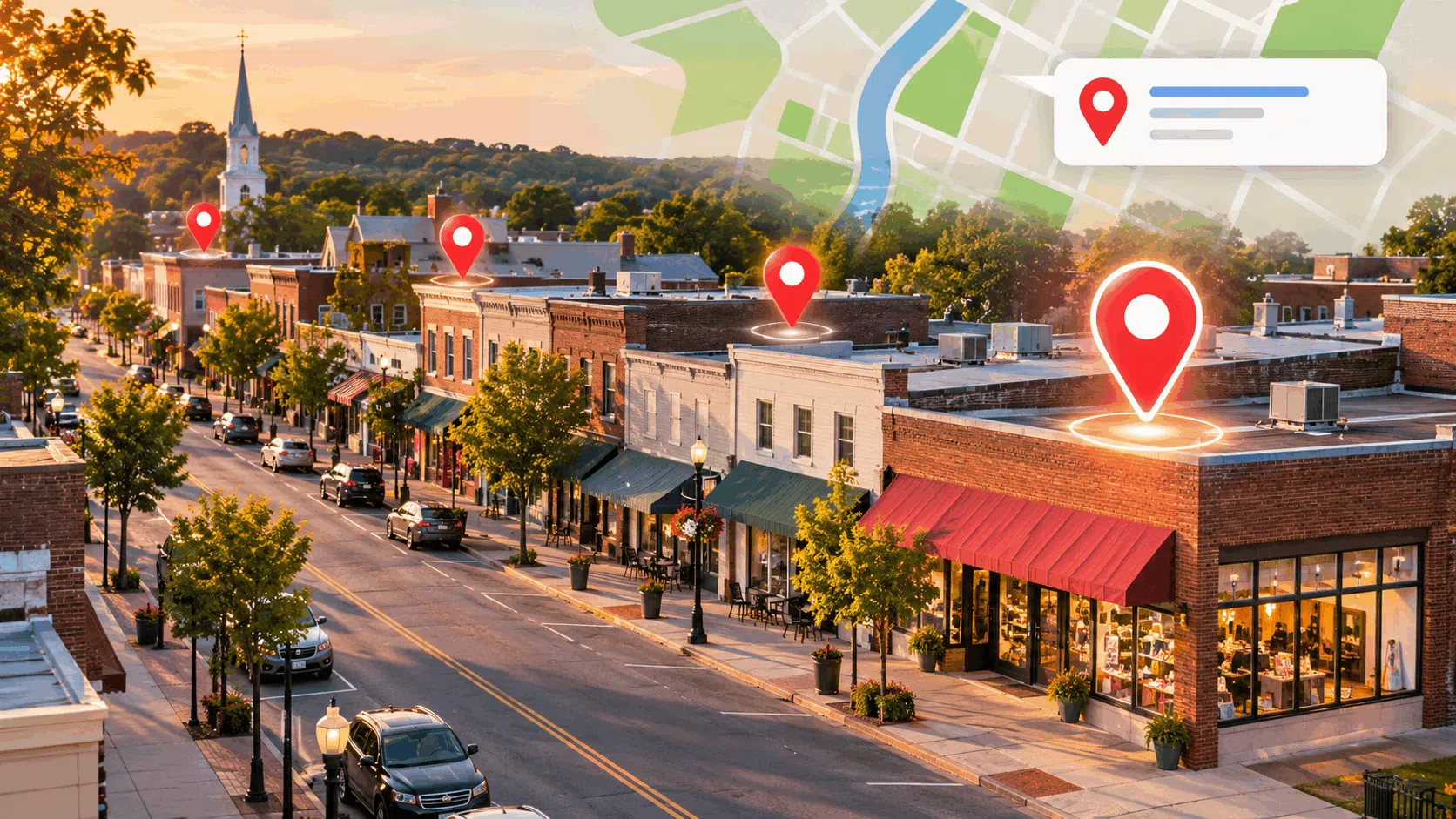
The map pack is the boxed cluster of three business listings that appears at the top of local search engine results pages, right under the map. For most local searches, those three spots capture a large share of clicks and calls. Everything in Google Maps SEO is really a fight for one of those positions.
Winning a map pack slot differs from ranking a web page. Google isn’t weighing blog content or backlink counts the same way here. It’s weighing your proximity to the searcher, how precisely your profile matches their query, and your prominence in the area.
Consider a landscaping company that ranks second in the map pack for “lawn care.” It gets a steady flow of calls. The same business sits on page two of the regular blue-link results and gets far less from there. That’s the point: your local search rankings inside Maps often matter far more to revenue than where your website lands in standard search engine results pages. The map pack is where location-based searches convert. If your listing has slipped lately, it’s worth running a local SEO audit to find what’s hurting your Maps rankings before guessing at fixes.
How reviews and ratings influence Maps visibility
Reviews and ratings are one of the clearest prominence signals Google uses. A business with 80 recent, detailed reviews looks more established and trustworthy to the algorithm than one with six reviews from three years ago. Volume, recency, and rating all feed into how you rank.
But star count alone isn’t the whole story. Reviews matter because they confirm relevance, too. When customers mention specific services in their reviews, “fixed my water heater fast,” Google reads those words as evidence you actually do that work, which strengthens your ranking for related local searches.
Responding to reviews matters as well. It signals an active, legitimate business and gives Google another layer of trust. Many assume a single bad review sinks your ranking. In reality, it rarely does on its own. A pattern of ignored reviews and a stagnant rating tends to do more damage than one unhappy customer. Steady customer reviews over time build the prominence that lifts search visibility and keeps local customers choosing you over the next listing, a pattern confirmed year after year in BrightLocal’s annual local consumer review survey.
Ranking factors Google uses for local results (relevance, distance, prominence)
Google’s local ranking comes down to three factors: relevance, distance, prominence. Understanding relevance, distance, and prominence is the whole game, because every optimization you make maps back to one of them.
- Relevance is how well your profile matches the search. Your business category, services, and keywords tell Google what you do and who you serve.
- Distance is how close you are to the searcher or the location they named. You can’t move your office, but you can clarify your service area.
- Prominence is how well-known and trusted you are, built from reviews, local citations, links, and overall online presence.
The root cause of most ranking struggles is a relevance mismatch. A listing can be live, verified, and still invisible for “emergency electrician” if the category is set to “electrical supply store.” Picture a two-person HVAC outfit that quietly runs residential repairs all summer but never updated its primary category from the generic “contractor” label it chose at signup. Homeowners searching “AC repair near me” never see it, and the calls flow to a less-experienced competitor whose category actually matches the search. These ranking factors also vary in weight by query and location, and Google regularly adjusts its algorithm, so results shift. Fix the factor you control first: relevance through accurate categories and local keywords.
Citations and NAP consistency basics
A citation is any online mention of your business name, address, and phone number on directories, review sites, social profiles, and local listings. NAP consistency means those three details match exactly everywhere they appear. This is quieter work than reviews, but it’s foundational.
Here’s why NAP consistency matters: Google cross-references your business information across the web to confirm you’re real and located where you claim. When your phone number differs on Yelp from your profile, or your suite number is missing in one place, that mismatch creates doubt. Doubt suppresses rankings.
Inconsistent details, not just a weak profile, are a frequent reason Google flags a listing as low quality. Local citations on reputable directories also add prominence, so they pull double duty. Start with the big ones: Google Business Profile, Apple Maps, Bing Places, Yelp, and your industry’s main directories. Audit them, fix every discrepancy, and keep them aligned whenever your business details change. For many local businesses, cleaning up citations alone can unlock movement that no amount of posting could.
Step-by-step: optimizing your Business Profile to rank higher
Here’s the practical sequence to optimize your profile and rank higher in local search results. Work through it in order.
- Claim and verify your Google Business Profile so Google trusts you own the listing.
- Set the most accurate primary business category, then add relevant secondary categories.
- Fill every field completely: hours, phone, website, address or service area, and attributes.
- Write a clear business description using the local keywords your customers actually search.
- Add real, high-quality photos of your work, team, and location, not stock images.
- List your specific services and products with plain-language descriptions.
- Build citations on major directories and confirm NAP consistency across all of them.
- Request reviews from recent customers and respond to every one, positive or negative.
- Publish regular Google posts about offers, updates, and news to keep the profile active.
- Review your profile’s performance insights monthly and adjust based on what customers search.
If this feels like a lot to manage alongside running a business, Vineet Kukreti handles Business Profile optimization, citations, location pages, and reviews as a done-for-you local SEO service, so the work gets done right without eating your week. For a more detailed walkthrough of each stage, this step-by-step local SEO guide for small businesses breaks down the process further.
How Maps visibility turns into calls and leads
Ranking is the means, not the end. The goal isn’t more clicks. The goal is better business outcomes. Maps visibility only matters when it converts into phone calls, direction requests, and booked jobs.
The path is short. Someone searches, sees you in the map pack, scans your rating and photos, then taps call or directions. Every element on your profile either removes friction or adds it. A missing phone number, closed hours during a search, or zero photos can send that lead to a competitor in seconds. This is the mechanism most owners miss: a high ranking only puts you in front of the searcher, but it’s the profile details that decide whether they act, so a strong position with a weak profile can still leak leads.
Traffic alone isn’t enough. A listing that gets many views but few calls has a conversion problem, not a visibility problem. Strong reviews, accurate hours, a compelling description, and clear service info help turn views into qualified leads. Track your profile insights to see what’s actually happening: how many people call, request directions, or visit your site. When views are high, but calls are low, the fix is on the profile, not in chasing more rankings. That’s where real organic growth and more leads tend to come from.

Showing up in AI-generated local answers (ChatGPT, Gemini, Perplexity)
Local search is changing. People now ask ChatGPT, Gemini, and Perplexity for a “good plumber in Denver” and get a short list of names, often with no map in sight. If your business isn’t in those answers, you’re missing a growing slice of local demand.
AI search visibility draws on many of the same signals as Google Maps SEO: a complete Google Business Profile, consistent citations, strong reviews, and clear, well-structured website content that builds your overall online presence. The better machines can read and verify your information, the more likely they are to recommend you. The overlap runs so deep because these tools rely on the same public, cross-verified data Google trusts, so the work you do to earn Maps visibility can compound into AI visibility rather than splitting your effort.
What’s new is how these tools cite sources. They pull from structured data, review platforms, and pages they can crawl cleanly. A business that ranks well on Google but is absent from AI answers usually has a technical or structured-data gap. Vineet Kukreti runs AI visibility audits and sets up schema, llms.txt, and crawler access so businesses show up in both Maps and AI-generated local answers. Getting found in AI results is becoming as important as the map pack itself.
If your business is nearby but still losing calls to competitors on Google Maps, a focused review of your Business Profile and local signals usually shows exactly where the gaps are. Book a free discovery session with Vineet Kukreti to find out what’s holding your local search rankings back and what to fix first. No contracts, no jargon, just plain-English direction.
FAQs
Q1. What exactly is Google Maps SEO?
A1.
It’s the practice of optimizing your Google Business Profile and related signals so your business appears higher in Google Maps results and the Local Pack. Google scores listings on three factors: relevance to the search, distance from the searcher, and prominence based on reviews, links, and citations.
Q2. Why isn't my business showing up on Google Maps?
A2.
Search your exact business name plus city in an incognito window; if nothing appears, your profile is likely unverified, suspended, or flagged as a duplicate. If it shows up by name but not for service terms like “plumber near me,” the listing is live but not yet relevant enough to rank for those searches.
Q3. Is Google Maps SEO actually worth the effort for a small business?
A3.
A fully completed Google Business Profile gets roughly 7x more clicks than an incomplete one, and detailed profiles make customers about 29% more likely to choose that business. That said, the payoff depends on your category and local competition; a dentist in a dense city faces a harder climb than a specialty contractor in a mid-size town.
Q4. What's the difference between Google Maps SEO and regular local SEO?
A4.
Local SEO is the broader umbrella; it includes your website content, location pages, backlinks, and structured data. Google Maps SEO is the narrower slice focused specifically on your Business Profile, proximity to searchers, and the signals that get you into the map pack itself.
Q5. My Google Maps listing looks fine; why does Google mark it as low quality?
A5.
Low-quality flags usually come from thin or inconsistent business information, missing categories, blurry or stock photos, or NAP (name, address, phone) details that don’t match what’s listed elsewhere online. Google’s algorithm treats these gaps as signals that it can’t fully trust the profile, which suppresses ranking even if the business itself is legitimate.
Q6. Can I rank well on Google Maps without a website?
A6.
You can appear in Maps results with just a Business Profile, but Google cross-checks your profile against your website and other citations to confirm relevance and prominence. Businesses without a website tend to plateau lower in competitive categories because they’re missing a key trust and relevance signal Google uses in ranking.
Q7. How long does it take to see movement in Google Maps rankings?
A7.
Profile and category fixes can shift visibility within a few weeks, but prominence signals like reviews and citations typically take two to four months of consistent activity to move the needle. Highly competitive categories in major metro areas usually take longer than low-competition niches in smaller towns.
Q8. What if my competitors have way more reviews than me, can I still rank higher?
A8.
Review count matters for prominence, but it’s only one of three ranking factors alongside relevance and distance. A business closer to the searcher with a well-optimized, category-accurate profile can outrank a competitor with more reviews but weaker relevance or a farther location.

Vineet Kukreti is an experienced SEO and project management expert with over 10 years of success helping small businesses grow. He has led SEO campaigns that improved Google rankings, increased website traffic, and strengthened local visibility. As a project manager, Vineet brings structure and efficiency to digital operations, ensuring smooth execution and measurable results. His combined expertise in SEO and business operations makes him a trusted partner for growth-focused businesses.